
Stirling Castle interior: a route through the rooms
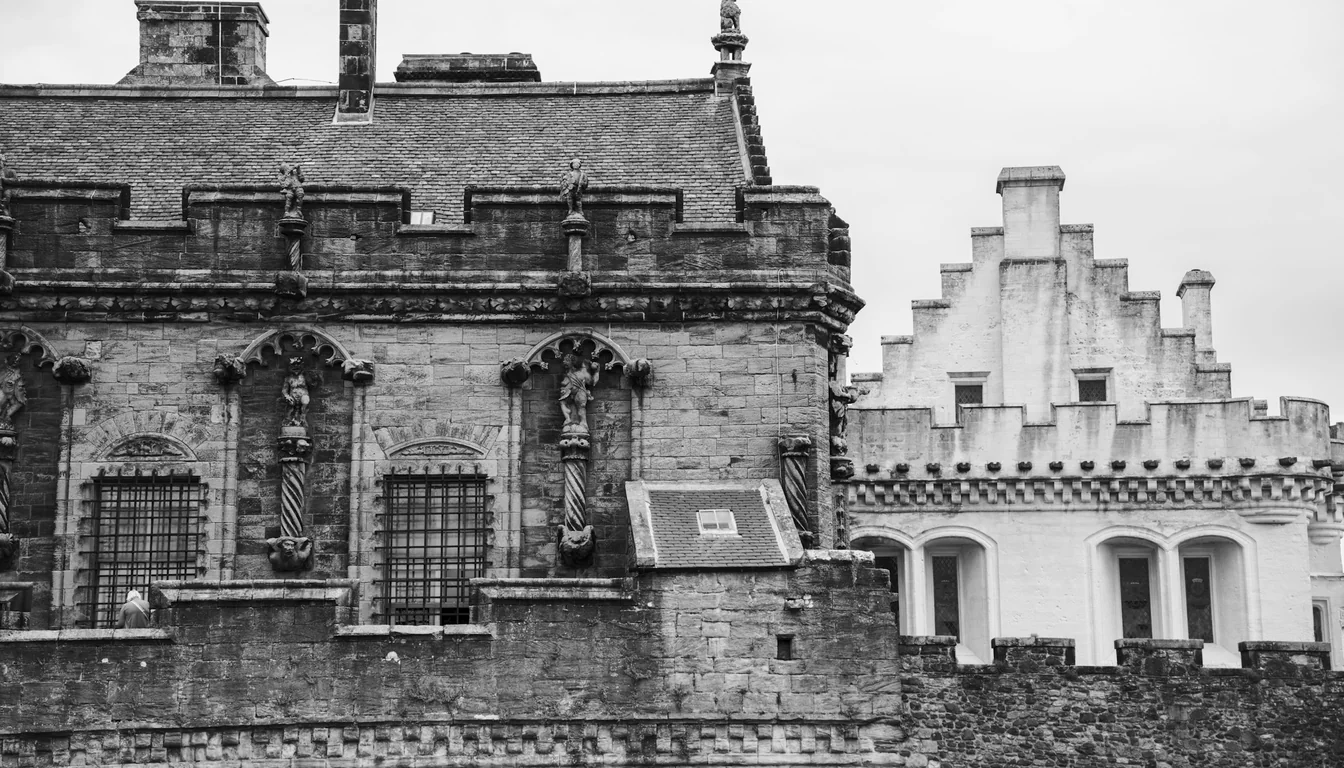
Plan a route through Stirling Castle's palace, hall and chapel. Distinguish recreated rooms from older fabric and check steps before adding museums.
Last updated
The short answer
Give the Stirling Castle interior a clear order: palace, hall and courtyard first, then the rooms that fit your interests and access needs. The best route connects different uses of the castle without trying to enter every space at the last minute.
In this guide8
The Stirling Castle interior is a route through several buildings, not one continuous palace. Start with the royal rooms and Great Hall. Add the chapel or kitchens if time and access allow. Museums need a separate check. Courtyards and slopes connect those stops.
Use the Royal Palace and Great Hall as the core interior visit. The palace includes recreated rooms showing a possible Renaissance setting; the hall belongs to an earlier royal building campaign. The Chapel Royal and Great Kitchens add distinct uses of the castle. Check steps, one-way routes and museum hours before treating every room as part of a single easy circuit.
Start the Stirling Castle interior with the palace
The palace was built around 1540. Its design followed Renaissance fashions from continental Europe. The recreated rooms help explain royal display. But they are not a claim that every object has stood in the same place since that date.
Read the room labels to see what has survived and what was added later. A bright interior can still explain a historic setting without being an untouched survival. That distinction is useful for children too: ask what evidence the room is trying to show.
The visit guide describes access from the Lion's Den and a one-way system. Follow the route given on the day. If you hope to return to a room for a photo or closer look, check whether the route allows it first.
Compare the Stirling Castle interior buildings
The Great Hall was added around 1503. The Chapel Royal dates from 1594. Seeing them in that order makes the time gap clear, even though they stand around the same central courtyard.
The hall is the better stop for thinking about large royal gatherings. The chapel tells a distinct story about ceremony. Neither should be treated as another palace room with the same purpose and date.
Both have level access from the cobbled courtyard, according to the visit page. That is useful at the doorway. But the courtyard route itself has slopes. Check the approach as well as the threshold when choosing your stops.
Add kitchens and museums with care
The Great Kitchens date from the early 1500s and are reached by several steps down. They can balance the royal rooms by showing work behind the court. If stairs are difficult, build a route that still gives the palace and hall enough time.
The regimental museum has steps at its entrance and several staircases. The listed access information counts 114 steps in the museum. Do not treat museum access as the same as hall access just because both sit inside the castle grounds.
Separately run museums have their own hours. The regimental museum closes 45 minutes before the castle. So a final-hour visit can narrow your choices. Check its hours before leaving it until the end.
Choose a room route rather than a checklist
For a short visit, use the palace, Great Hall and courtyard as a small group of stops. For a longer visit, add the chapel and kitchens before deciding on museum time. These are editorial route suggestions, not a required operator sequence.
Keep an outside pause between rooms. It helps make sense of which building you have entered and avoids treating the visit as a stream of unrelated displays. The Inner Close is the central court. So it is a useful place to regain your bearings.
An audio guide or guided visit may help connect the buildings. Check the current options on arrival and keep separate any paid tour whose inclusions you have not read.
Read each room with its building in mind
Before entering, look at where the room sits around the courtyard. After leaving, pause and compare it with the next building. The hall and palace become easier to remember. The chapel then fits into the story rather than another room label.
A short written record can help: building name, date from the label and one thing you noticed. Use the object labels to keep your descriptions accurate. An impressive room does not need a made-up ceremony or an invented original furnishing to be interesting.
Plan the next part of your trip
Use the main visit guide to choose the rooms and the time block. Read Stirling Castle.
Choose a route through the courtyards that fits your time and access needs. Read Stirling Castle map.
Compare entry on your own and a planned route before choosing transport. Read Stirling Castle tours.
FAQ
Are the palace interiors original?
The visitor description explains that the palace interiors have been recreated as they may have looked when the Renaissance building was complete. Read the labels to distinguish surviving fabric from later work. The rooms are useful for seeing a possible court setting, rather than an untouched home from the 1500s.
Can wheelchair users enter the hall?
The visit page states that the Great Hall has level access from the cobbled courtyard. The overall approach still includes slopes and uneven surfaces. Check the full route with staff before relying on that doorway fact, especially if you need assistance getting from the entrance to the Inner Close.
Are the kitchens on the same level?
No. The visit guide says the Great Kitchens are reached by several steps leading down. Build your visit around the rooms you can comfortably use. And check current advice if stairs are a concern. The palace, hall and chapel should be planned by their own access plans.
Do all museums close with the castle?
No. Separately run museum closing times vary. And the regimental museum closes 45 minutes before the castle. Check the current hours at the start of your visit. If a museum matters to you, place it earlier in the route rather than assuming it will stay open until the gate closes.
Verdict
Give the Stirling Castle interior a clear order. Visit the palace and hall first, with a courtyard pause. Add rooms that suit your interests and access needs. The best route connects distinct uses of the castle without trying to enter every space at the last minute.